Fix winding-surface optimization example - #66
Conversation


c846c00 to
659ae6b
Compare
rogeriojorge
changed the title

|
@dseidita1919 Doing my own tests, to see if a couple things might help:
|
rogeriojorge
changed the title
88a1dc1 to
659ae6b
Compare
rogeriojorge
changed the title
|
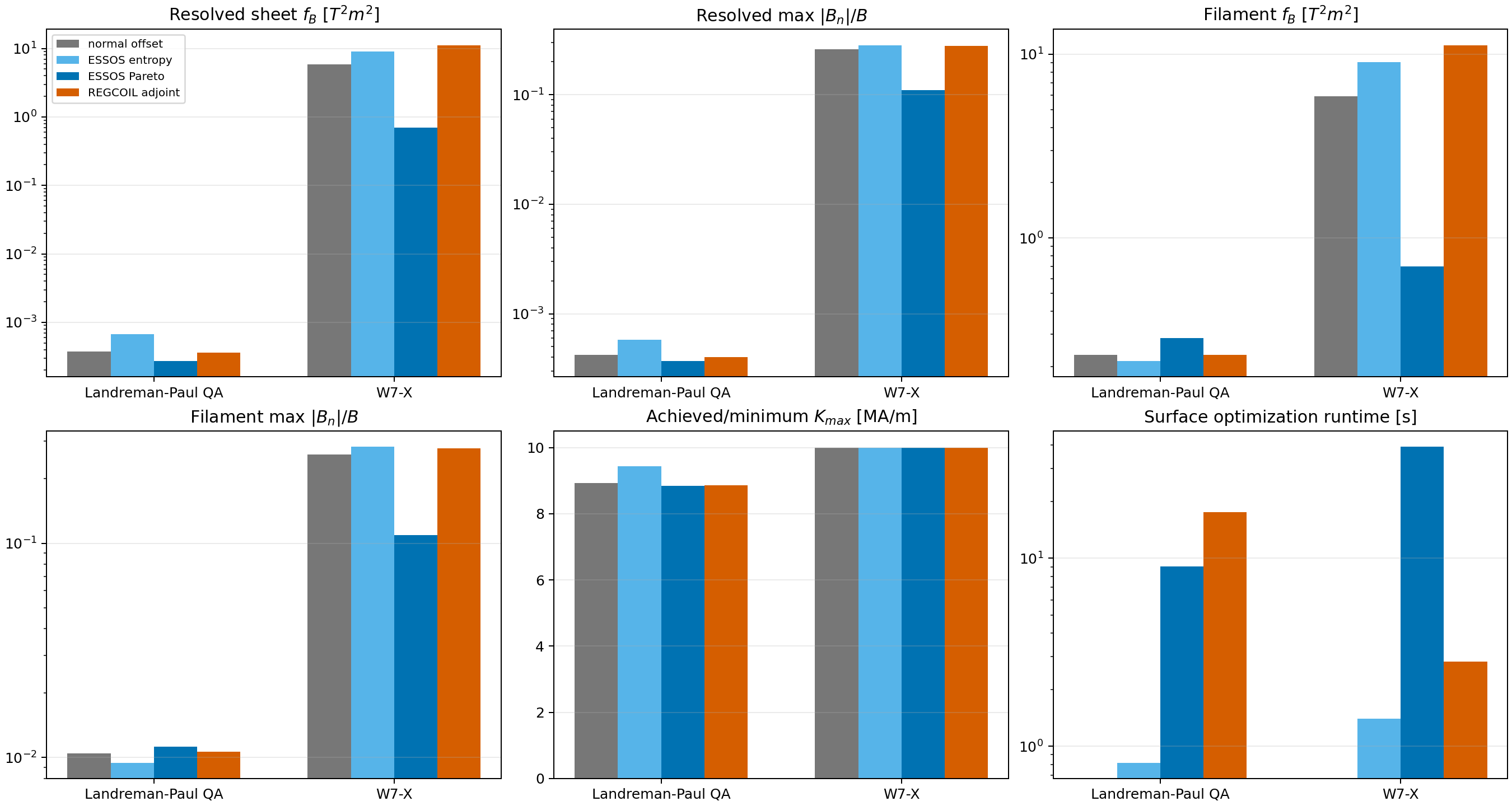
The resolved comparison is now included in the PR under examples/winding_surface_comparison. Main findings:
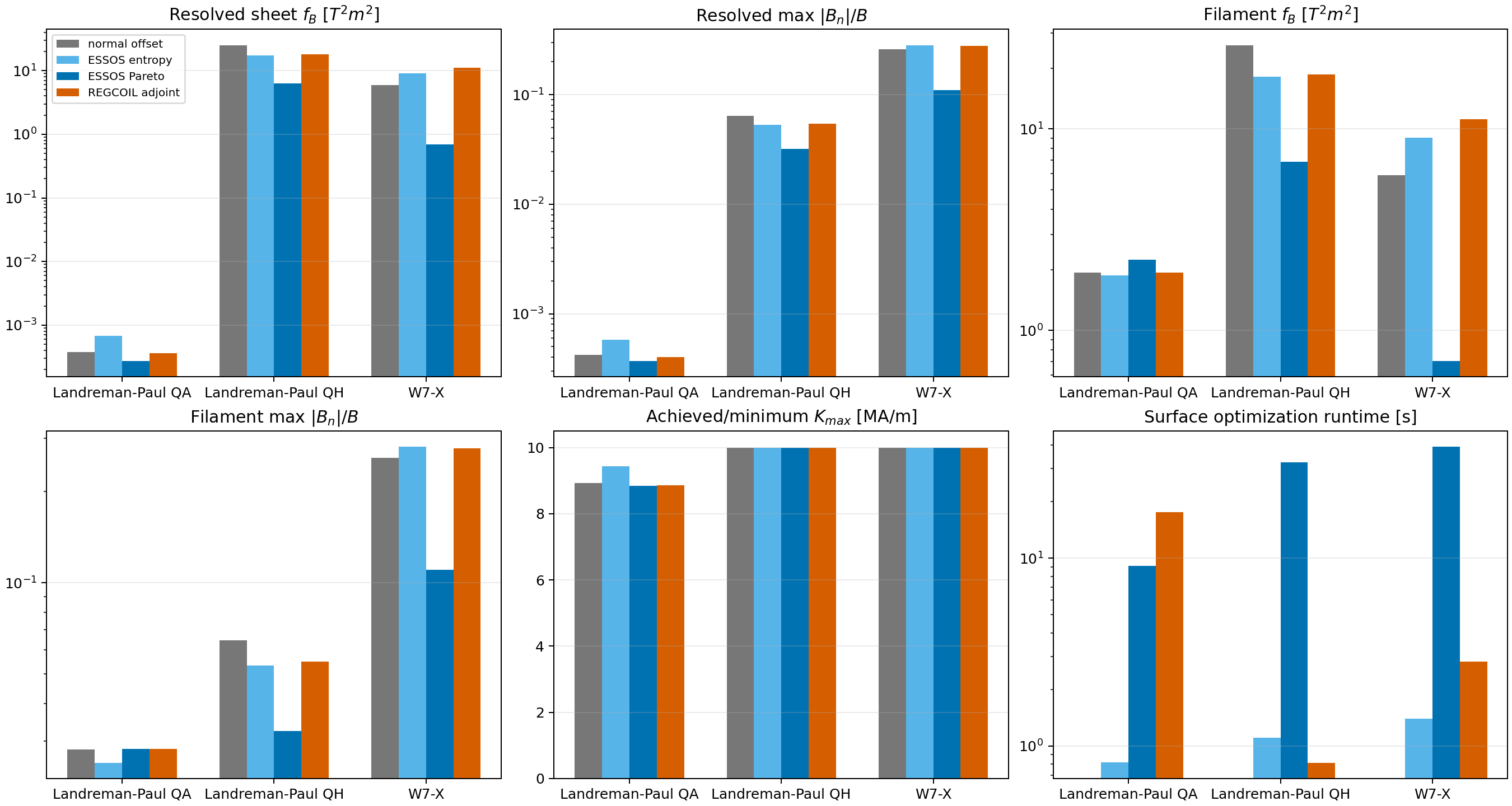
Resolved sheet and filament metrics:
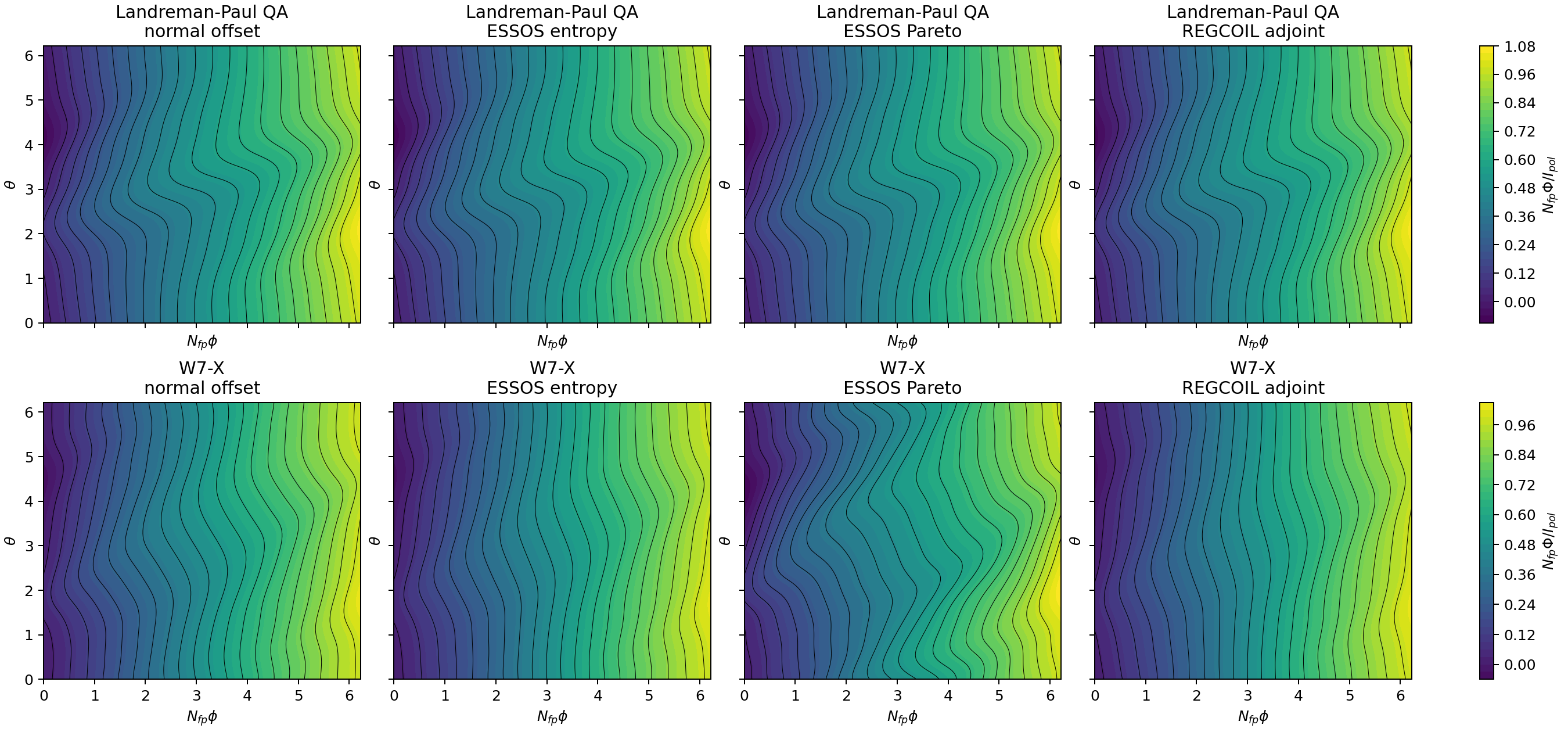
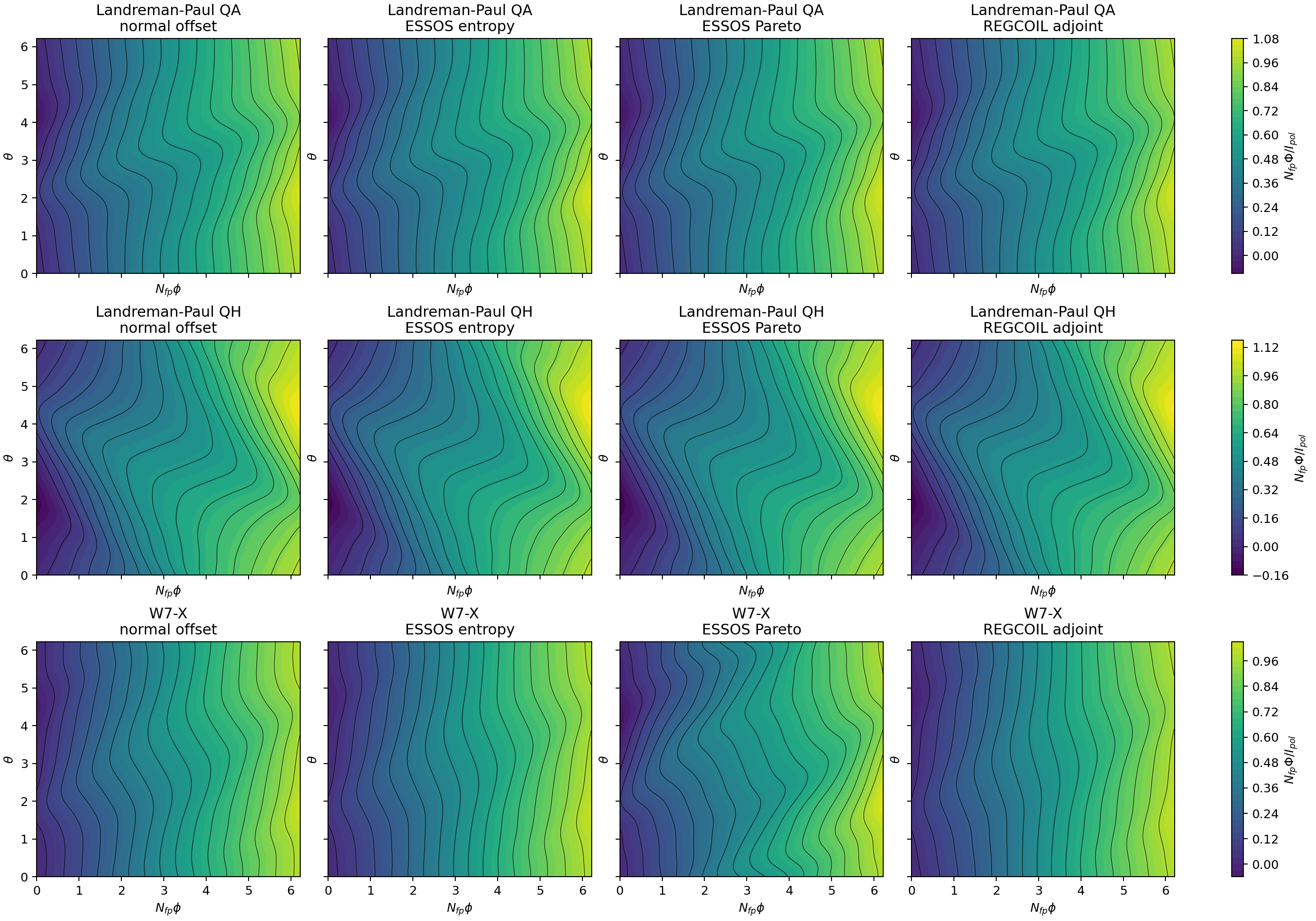
Resolved current potentials and coil contours:
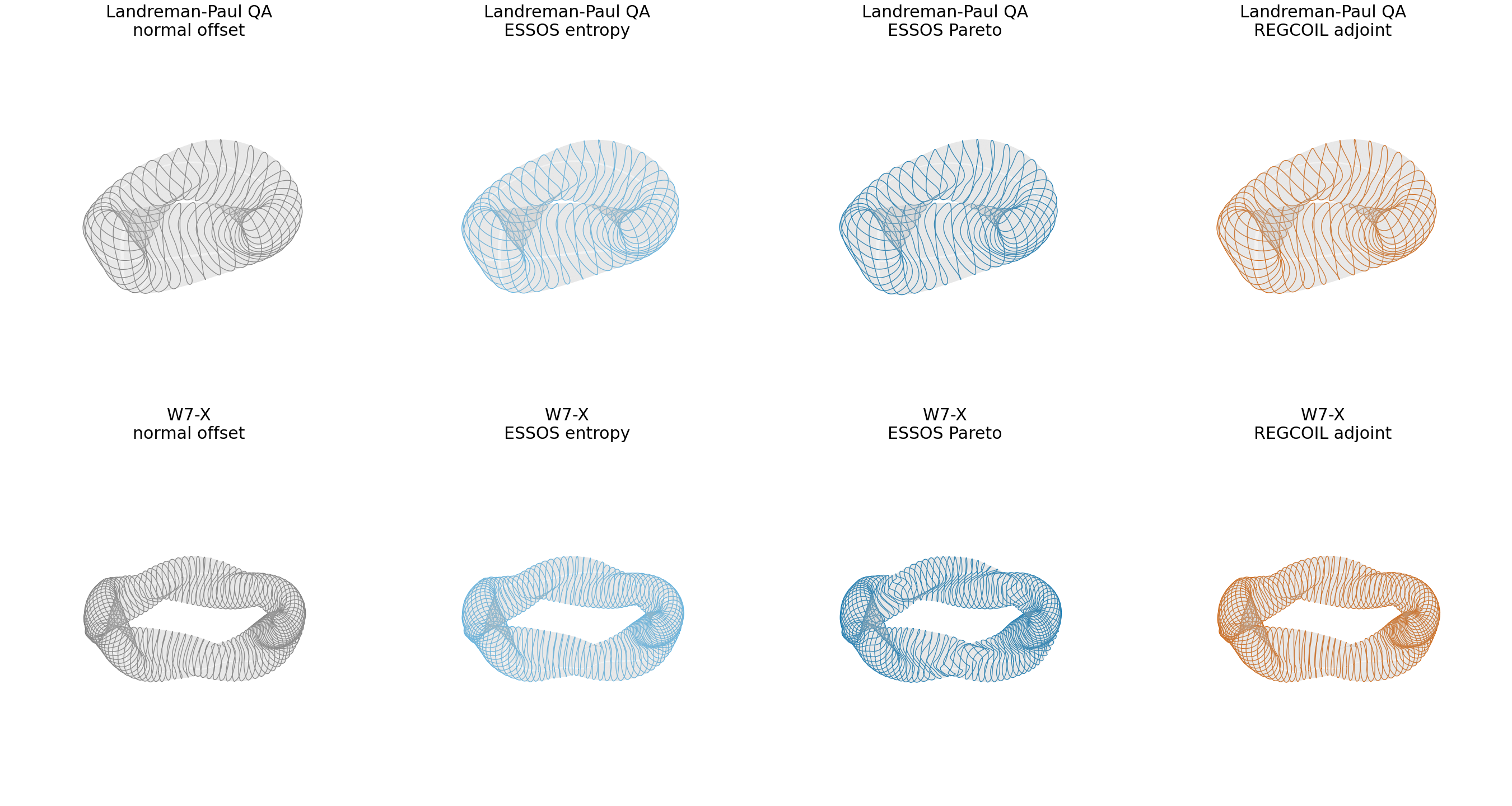
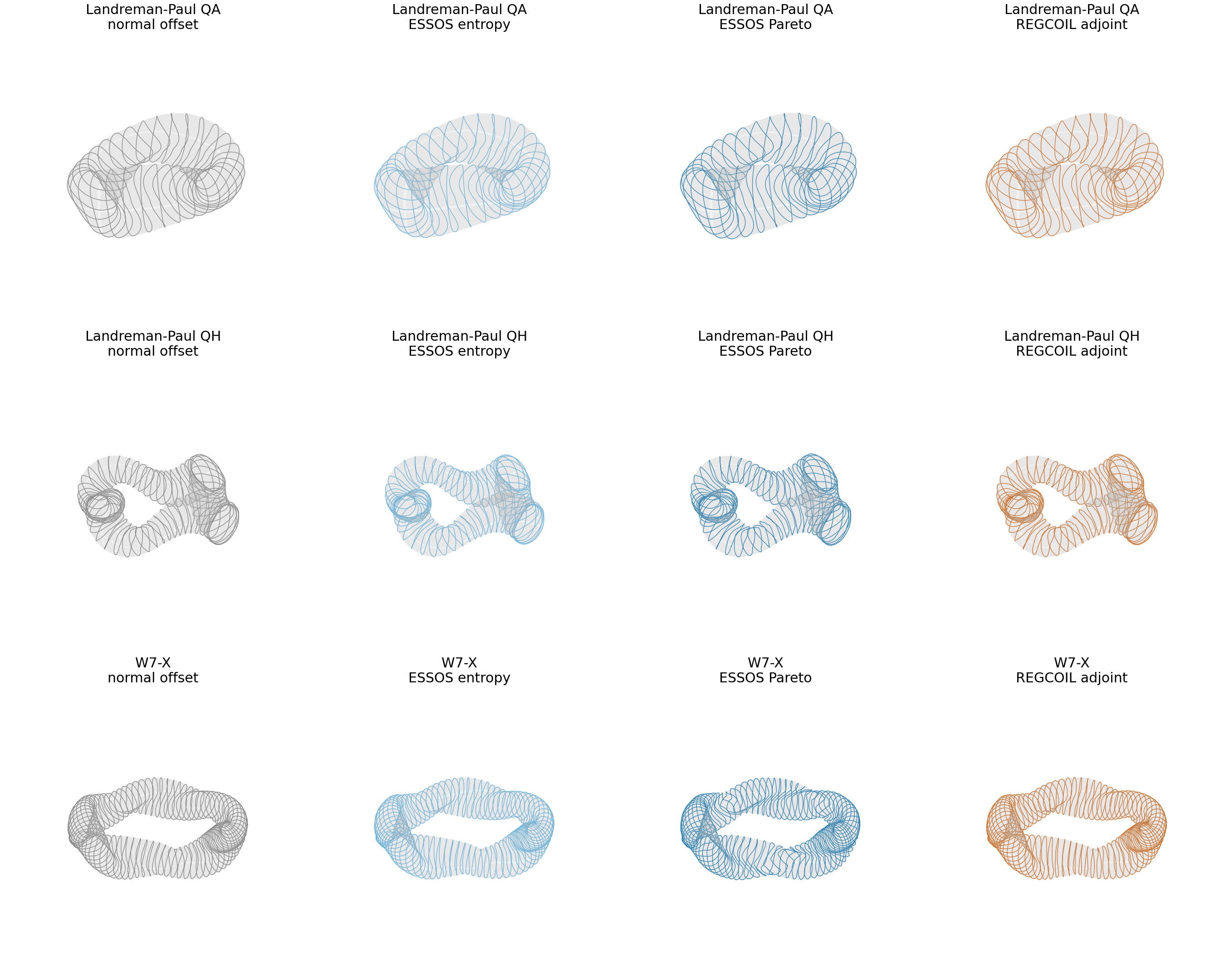
Resolved winding surfaces and coils:
The remaining figures and CSV tables are in the same folder. |
|
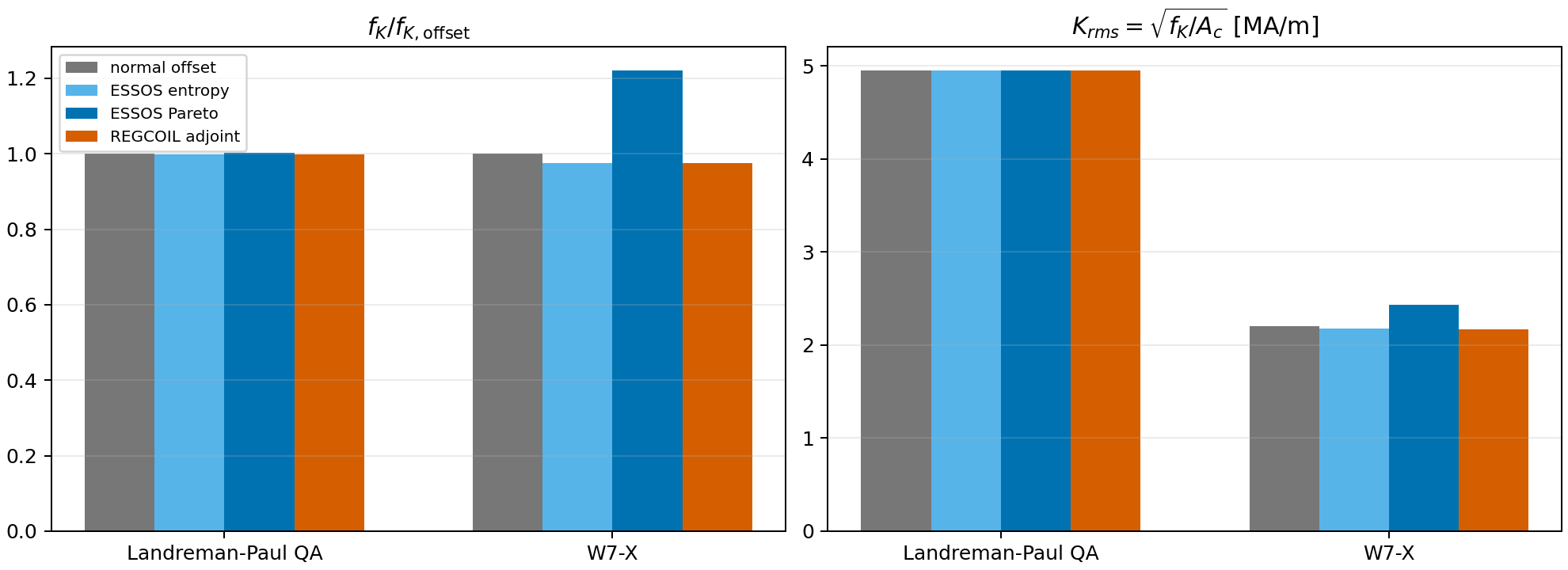
Added the requested Pareto definition and current-complexity comparison. For each trial surface, the inner problems are with The outer objective minimizes the mean normalized The new figure compares
For QA, the Pareto surface has essentially the same complexity as the normal offset: The dimensional |
|
Added a second, additive study with eight coils per half field period. The original ten-coil results are unchanged. The new study also adds Landreman-Paul QH. Main results from the independent 96x96 validation:
Resolved metrics:
Current potential and coil contours:
Winding surfaces and coils:
The reproducible driver, CSV tables, complexity plot, convergence plot, and remaining figures are in |
1 participant

This updates the winding-surface optimization example and adds a resolved comparison with REGCOIL and QUADCOIL.
Corrections
close=Falseso periodic endpoints are not duplicated4*pi^2normalizationESSOS peak-current Pareto objective
For every trial winding surface, ESSOS solves the regularized current-potential problem at three nearby peak-current limits:
where
and$K_i=(0.95,1.00,1.05)K_{\mathrm{target}}$ . The winding surface minimizes
The three samples cover a short section of the$f_B$ --$K_{\max}$ trade-off curve, so the surface is not tuned to one regularization value. The geometry term preserves volume, controls the Fourier spectrum, retains at least 90% of the initial plasma clearance, and penalizes small Jacobian or nonlocal self-approach. This is a local three-point Pareto objective, not a construction of the complete Pareto front.
The optimization uses 32 points per angle per field period. Surface motion is capped at 2% of the plasma minor radius per active Fourier coefficient.
Results
For the included QA example at 7 MA/m, a separate 96x96 REGCOIL evaluation gives:
At 10 MA/m, the Pareto surface reduces resolved sheet fB by 27.6% relative to the normal offset for QA and by 88.2% for W7-X. W7-X filament fB is reduced by 88.1%. The QA filament result is worse despite its improved sheet result, so no universal coil-improvement claim is made.
The current-complexity comparison uses the same$f_K$ as the inner regularization. Relative to the normal offset, ESSOS Pareto changes $f_K$ by +0.24% for QA and +22.2% for W7-X. W7-X RMS current increases from 2.208 to 2.432 MA/m while both surfaces satisfy the same 10 MA/m peak limit. The field-error improvement therefore has a visible current-complexity cost.
The driver, numerical tables, all figures, and detailed notes are under
examples/winding_surface_comparison/. QUADCOIL's W7-X solves did not converge and are marked failed rather than treated as valid results.Eight-coil study
An additive study under
examples/winding_surface_comparison_8_coils/repeats the comparison with eight coils per half field period and adds Landreman-Paul QH. At 96x96, the QH Pareto iterate reduces sheet fB by 75.1% and filament fB by 73.6% relative to the normal offset. The QA case shows the limitation clearly: its sheet result improves, but filament fB is 15.7% worse with the reduced coil count. The QH Pareto outer solve stopped on a line-search failure, so it is reported as a valid non-converged iterate.